

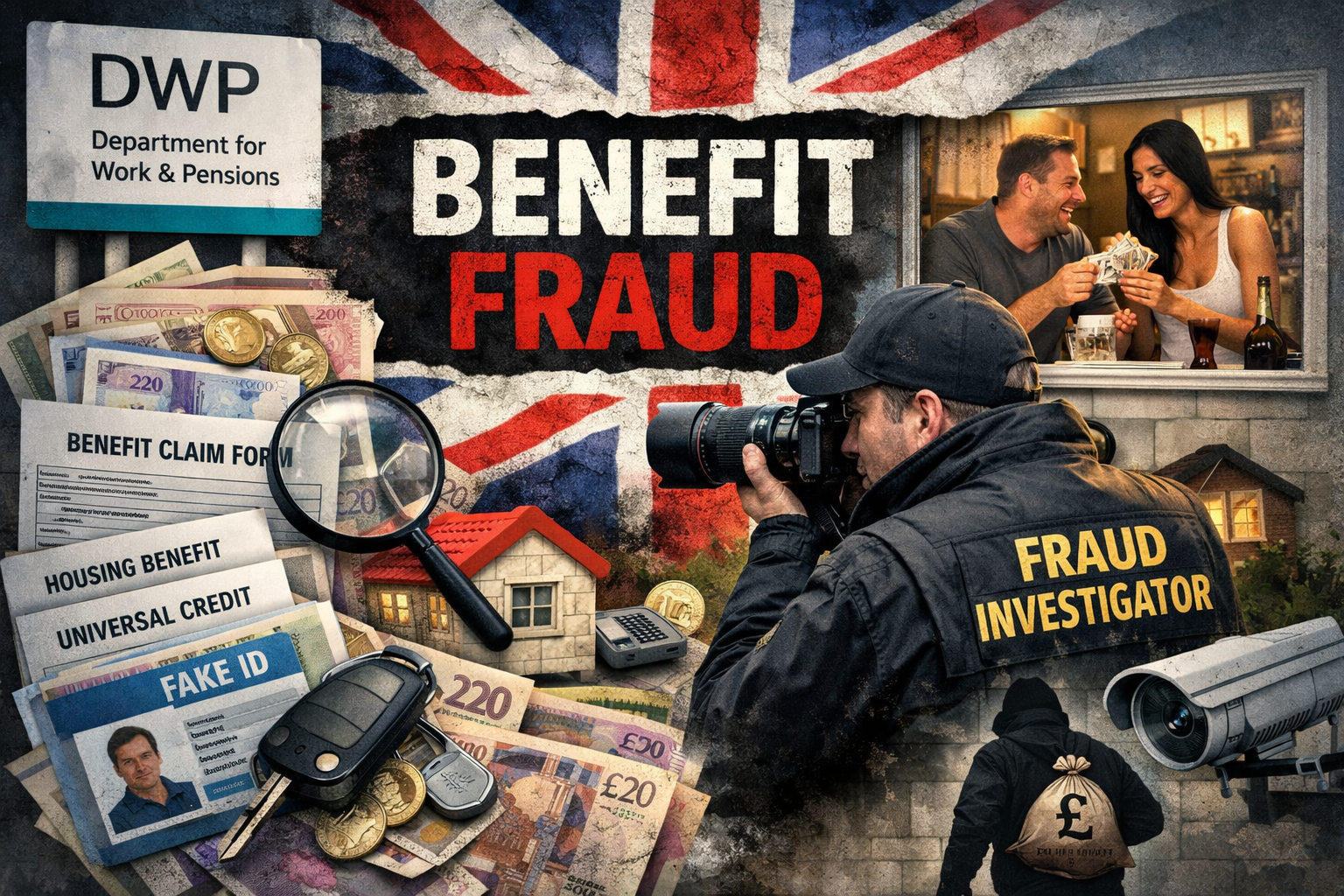
Benefit Fraud in the United Kingdom
Most people want to follow the rules when claiming support, but navigating the complex system often causes anxiety. According to official government guidance, making an honest mistake on your paperwork does not mean you have committed benefit fraud in the United Kingdom. Rather than orchestrating sophisticated scams, many claimants simply worry that forgetting a minor detail could result in severe penalties. This overview covers how agencies across England, Scotland, and Northern Ireland handle these concerns.
Understanding the difference between benefit error and fraud relies on the “Action + Intent” formula. Criminal behaviour only happens when someone intentionally acts—by providing false information or deliberately hiding a life change—to claim money they are not entitled to receive. The Department for Work and Pensions (DWP) monitors compliance to protect public funds, specifically targeting this deliberate deception rather than genuine clerical slip-ups, and to deter benefit fraudsters UK.

Summary
This guide clarifies that benefit fraud in the UK requires deliberate deception (“action + intent”), distinguishing genuine mistakes from criminal behaviour. It highlights key compliance areas—capital limits for Universal Credit, relationship/household changes, and prompt reporting—to prevent overpayments and allegations. It explains how the DWP detects discrepancies (data matching, bank checks, anonymous reports), what to expect at an interview under caution and your rights, and the range of penalties and appeals. It also signposts nation-specific reporting routes and practical steps—record-keeping, voluntary disclosure, and seeking free advice—to stay compliant and report concerns safely.
The ‘Bucket’ Rule for Savings: Why Your Capital Limits Matter for Universal Credit
Think of your Universal Credit eligibility like a bucket. When the money in your personal “savings bucket” fills up, the financial support you receive from the government has to adjust. With upcoming DWP bank account monitoring powers, authorities will have an easier time automatically checking these balances, making it incredibly important to understand the rules yourself so you do not get caught out.
To avoid issues like accidental housing benefit fraud, you must understand what counts as capital—such as ISAs, premium bonds, or properties you do not live in—and the key thresholds:
- Under £6,000: Your benefit payments remain completely unchanged.
- Between £6,000 and £16,000: A rule called “tariff income” applies, which reduces your payment by a set amount for every £250 you have over the £6,000 mark.
- Over £16,000: Your bucket overflows, and your Universal Credit claim stops.
Reporting a sudden windfall immediately protects your claim. If you accidentally go over the limit, making a voluntary disclosure of overpaid benefits in the UK ensures you fix the mistake without facing severe penalties. These principles also apply if officials are assessing a potentially fraudulent claim of Universal Credit, so keep careful records to avoid confusion. While tracking your bank balance is straightforward, your household makeup is another crucial factor that directly impacts your eligibility.
Living Together vs. Living Alone: How Relationship Changes Impact Your Benefits
Navigating relationship milestones can complicate your financial support. Many rely on the false “three-night rule,” mistakenly believing a partner can stay over several nights weekly without penalty. In reality, the DWP examines whether you actually share a household and act as a couple, and misunderstanding this distinction frequently gets honest people branded as benefit cheats.
Because benefits use joint assessments for couples, sharing household bills or pooling money means your combined income dictates your eligibility. It is crucial to be proactive about reporting a partner living with you for Universal Credit as soon as they officially move in. Delaying this update directly violates the rules regarding failure to notify a change of circumstances, potentially triggering sudden payment stops or stressful overpayment demands.
Updating your online journal immediately ensures your joint claim remains perfectly compliant. You simply log into your account and submit a relationship change regarding your living situation. While you might assume a gradual move-in goes unnoticed, modern investigations rely on extensive digital footprints to verify these details.
How the DWP Finds Out: Data Matching, Bank Checks, and Anonymous Reports
When people ask how the DWP investigates benefit fraud, they often picture detectives, but the reality is entirely digital. Investigations rely heavily on data matching, meaning government computers constantly talk to each other. The DWP automatically compares your current claim against HMRC tax records, ensuring any newly declared wages are instantly flagged without needing a human to check.
Beyond tax records, your banking footprint provides another clear view into your true financial circumstances. Officials increasingly rely on automated bank triggers to monitor accounts for sudden high balances that cross strict capital limits. If an unexpected inheritance or large gift pushes your savings over the allowed threshold, the system automatically alerts reviewers that your eligibility has changed.
However, digital trails are not the only way hidden details surface. Many cases still begin with anonymous tips to the UK benefit fraud hotline from neighbours or acquaintances. Specifically, reporting someone for working cash in hand—or reporting someone for working cash in hand and claiming benefits—remains a very common trigger for deeper lifestyle checks. If these initial flags raise serious concerns, the next step is usually being called to an interview under caution to officially explain the discrepancies.
If you need to report concerns, you can report someone for benefit fraud in several ways. You may report benefit fraud online anonymously, or use the benefit fraud hotline UK. The official benefit fraud number (sometimes listed as the benefit fraud telephone number or phone number for benefit fraud) is published on GOV.UK. For issues focused on Universal Credit, you can also submit a Universal Credit fraud report if you suspect a fraudulent claim of Universal Credit.
Nation-specific reporting routes
Processes differ slightly by nation, so use the correct channel for where the alleged conduct occurs:
- England and Wales: Guidance explains how to report benefit fraud England wide. You can report benefit fraud UK services online, including how to report a benefit cheat anonymously online or how to report a benefit cheat anonymously UK if you prefer not to share your name.
- Scotland: Check information for benefit fraud Scotland and follow the official online or telephone routes to submit details.
- Northern Ireland: For benefit fraud in Northern Ireland, use the dedicated channel to report benefit fraud NI. Guidance on reporting benefit fraud in Northern Ireland is available on NI Direct.
Common questions
- Can I find out if someone is receiving benefits? No. Personal claim details are confidential and will not be disclosed to the public. If you have concerns, use the official channels to report benefit fraud UK-wide.
- What happens when you report a benefit cheat UK? Authorities review the information, cross-check it against existing records, and may conduct further inquiries. If you later think, “I reported a benefit cheat—what next?”, outcomes vary: some cases end with no action if evidence is lacking, others lead to compliance checks, overpayment recovery, or in serious cases a criminal investigation.
What to Do During an Interview Under Caution: Your Legal Rights and Responsibilities
Getting a DWP letter is stressful, but you must check exactly what type of meeting is being requested. A standard compliance telephone interview simply updates your current details. However, an interview under caution means officers suspect a crime has occurred. Under the formal DWP interview under caution procedure, everything you say is recorded for potential court use.
Because this is a criminal matter, strict police rules—known as PACE—protect you during questioning. Knowing your legal rights during a benefit fraud investigation is crucial before you answer anything. During the meeting, you always have:
- Free legal representation: You can bring a solicitor with you at no cost.
- The right to silence: You do not have to answer their questions.
- The right to pause: You can stop the meeting at any time to seek advice.
Preparing beforehand helps clear up honest misunderstandings quickly. Bring relevant types of evidence used in benefit investigations, like recent bank statements or household receipts, to prove your actual living situation. After the meeting, the DWP decides what happens next, whether that means fixing simple errors or moving toward formal penalties, fines, and appeals.
Correcting Mistakes and Facing Consequences: Penalties, Fines, and Appeals
Final consequences depend heavily on your intent, highlighting exactly what happens during an inquiry or when someone is reported as a benefit cheat in the UK. Careless mistakes usually incur a simple £50 civil penalty plus overpayment recovery. For deliberate deception, the DWP might offer an Administrative Penalty—an extra fine designed to avoid court—or seek the maximum penalties for social security fraud in the UK through criminal prosecution.
If you believe the DWP calculated your debt incorrectly, you must act fast. The mandatory first step in appealing a benefit overpayment decision is requesting a Mandatory Reconsideration. This forces a completely different official to review your file afresh, giving you one month to submit clear evidence proving their maths is wrong.
Navigating fines and legal disputes is undeniably stressful, making proactive reporting your strongest defence. Establishing good communication habits early directly shapes your compliance and maintains your peace of mind.
Your Action Plan for Benefit Compliance
You now have the knowledge to protect your claim by separating honest mistakes from intentional deception. For total peace of mind, create a ‘Change of Circumstances’ log today. Transparency is your best defence. If you spot a personal error, immediate voluntary disclosure using official DWP contact numbers is crucial. Remember, you can always find free guidance from Citizens Advice or local law centres if you get stuck.
A fair system protects everyone. If you notice deliberate abuse and need to understand how to report benefit fraud, the government provides safe channels. You can easily report benefit fraud online anonymously or call the dedicated benefit fraud reporting line via the benefit fraud number UK. By embracing transparency, you keep the safety net strong across benefit fraud in the United Kingdom, whether concerns arise in England, Scotland, or Northern Ireland.
Q&A
Question: What actually counts as benefit fraud in the UK, and how is it different from an honest mistake?
Short answer: Fraud requires both action and intent. The DWP treats benefit fraud as deliberate deception—providing false information or intentionally hiding a change to receive money you are not entitled to. Genuine errors or misunderstandings, even if they lead to incorrect payments, are not fraud. The system focuses on protecting public funds by targeting intentional wrongdoing, not punishing clerical slip-ups.
Question: How do my savings affect Universal Credit, and what should I do if I receive a windfall?
Short answer: Universal Credit applies strict capital rules:
- Under £6,000: payments are unchanged.
- £6,000–£16,000: “tariff income” reduces your award for each £250 over £6,000.
- Over £16,000: UC stops.
Report any windfall or sudden increase in savings immediately to protect your claim. Keep clear records of your balances and sources of funds. If you accidentally exceed the limit, make a voluntary disclosure to correct any overpayment and reduce the risk of severe penalties. With growing use of automated bank checks, prompt reporting is the safest approach.
Question: Does having a partner stay over affect my benefits, and when must I report relationship changes?
Short answer: There is no “three-night rule.” The DWP looks at whether you’re living together as a couple—sharing a household, bills, or finances—because couples are assessed jointly. You must report as soon as a partner moves in, by updating your Universal Credit online journal with a relationship change. Delays can cause overpayments, payment suspensions, or investigations, and modern checks use digital footprints to verify living arrangements.
Question: How does the DWP find out about discrepancies, and how can I report suspected benefit fraud?
Short answer: Most checks are digital. The DWP:
- Data-matches your claim with HMRC tax records to flag new earnings.
- Uses automated bank triggers to spot savings over capital limits.
- Acts on anonymous tips, including reports of “cash-in-hand” work.
To report concerns, you can submit details online anonymously or call the official benefit fraud hotline listed on GOV.UK. Use the right route for your nation: England and Wales, Scotland, or Northern Ireland (NI Direct).
Question: What should I expect at a DWP interview under caution, and what are the possible outcomes and appeals?
Short answer: An interview under caution is a criminal investigation step (recorded under PACE), unlike a routine compliance call. You have the right to free legal representation, the right to remain silent, and the right to pause for advice. Bring relevant evidence (e.g., bank statements, household bills) to clarify issues. Outcomes range from correcting errors and repaying overpayments (often with a £50 civil penalty for careless mistakes), to an Administrative Penalty (a fine to avoid court), or criminal prosecution in serious cases. If you think a debt is miscalculated, you must request a Mandatory Reconsideration within one month and provide evidence.
Don’t worry if you have been scammed by BlockXFx or another scam brokerage, because you are not alone. To assist you in your fund recovery, we provide fund recovery services, legal advice, and support at LegalCertifi.com. Contact us now to initiate your justice.
To receive current updates, you can follow us, receive expert opinions and warnings about scams, please join us on:





Leave a Reply