

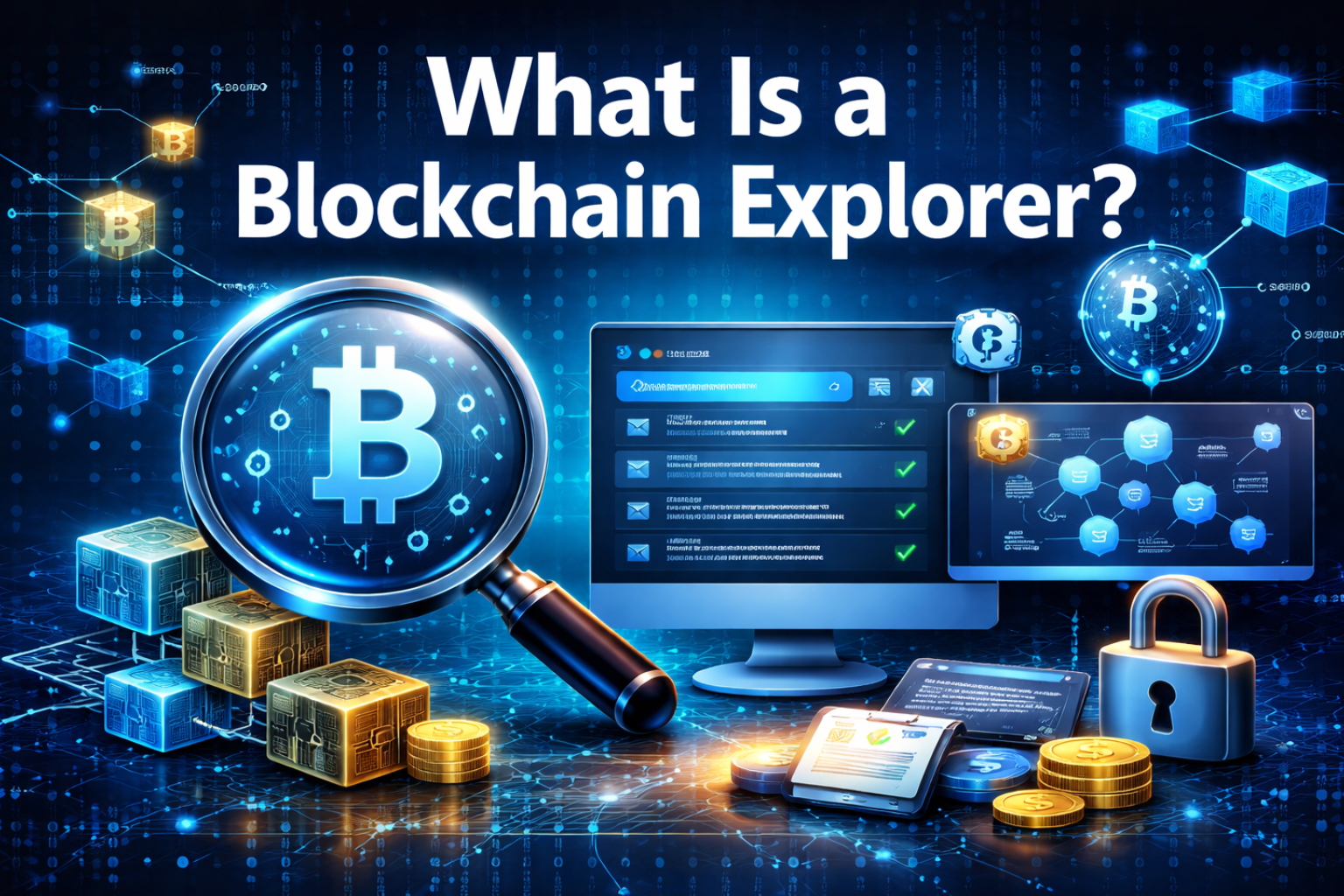
In today’s world of digital finance, knowing what a blockchain explorer is and how to use one is crucial, regardless of your level of experience as a cryptocurrency trader. This “What Is a Blockchain Explorer” guide simplifies everything so you can confidently navigate blockchain data.
What Is a Blockchain Explorer and Why Is It Important for Users?
A web-based tool that functions as a search engine for any blockchain network is called a blockchain explorer. Every transaction, wallet address, and block ever recorded on a public blockchain can be searched, viewed, and analyzed in real time.
Just as Google indexes web pages, a blockchain explorer indexes on-chain data. This data is accessible to anyone with an internet connection; no accounts or permissions are needed. It’s one of the most powerful features of decentralized technology: total transparency.
For everyday users, the importance is clear. Whether you’re verifying a payment, investigating a suspicious wallet, or working with an Asset and Fund Recovery specialist after a scam, a blockchain explorer gives you direct, unfiltered access to the truth on the chain.
How does Blockchain Explorer work?
The Core Technology
Every blockchain stores data in blocks — groups of validated transactions chained together in sequence. A blockchain explorer tool connects to a full network node, reads this chain in real time, and presents the data in a user-friendly browser interface.
When you type in a transaction ID, wallet address, or block number, the explorer retrieves all associated records instantly.
What Data Can You See?
- Transaction Hash (TXID): A unique fingerprint for every transaction
- Wallet Addresses: Who sent and who received the funds
- Transfer Amount: The exact value moved
- Block Confirmations: How many times the network has validated the transaction
- Timestamps: Exact date and time of every event
- Network Fees: The cost paid to process the transaction
This level of detail is why a professional Cyber Investigation Team relies on blockchain explorers as a primary tool when tracing stolen or fraudulently obtained crypto assets.
Blockchain Explorer Use: Practical Applications
Verifying Transactions
The most common blockchain explorer use is simply confirming whether a transaction went through. If you sent crypto and the recipient claims they haven’t received it, paste your TXID into the explorer. The result is instant and indisputable.
Tracking Bitcoin Payments
A blockchain explorer for Bitcoin transactions, such as Blockchain.com or Mempool.space lets you follow a payment from sender to receiver — and even trace where funds moved afterward. This is critical when dealing with platforms that appear on a known list of scam brokers, as victims can often identify the wallets used by fraudsters.
Supporting Fraud Investigations
When victims of Forex Scam Recovery Service cases come forward, one of the first steps professionals take is pulling on-chain data using a blockchain explorer. This forms the foundation of any credible investigation — mapping the flow of funds, identifying exchange deposits, and building a case for recovery.
How to Read Blockchain Explorer Data?
It is not necessary to have a technical background to comprehend how to read blockchain explorer data. Here is a simple, step-by-step method:
Step 1 — Open a Trusted Explorer
To learn more about Bitcoin, go to Blockchain.com, Blockchair, or Mempool.space. Use Etherscan for Ethereum.
Step 2 — Enter Your Search Term
Enter your block number, wallet address, or transaction ID in the search bar.
Step 3 — Read the Transaction Summary
Inputs (sender), outputs (receiver), the amount transferred, and the current status are all visible.
Step 4 — Check Confirmations
In Bitcoin, a transaction is considered final if it receives six or more confirmations. Fewer could indicate that processing is still ongoing.
Step 5 — Follow the Wallet Trail
Click on any wallet address to see its full transaction history — a technique heavily used in Chargeback Scam Recovery Service investigations to establish fraudulent patterns.
What Is a Blockchain Explorer and How Does It Work in Scam Recovery?
This is where things get critically important. Many victims don’t realize that crypto scams are not untraceable. Every fraudulent transfer — whether from a fake investment platform, a romance scam, or an unregulated broker — leaves a permanent mark on the blockchain.
This is the basis for What Is a Cryptocurrency Tracing Service, an expert service that tracks stolen money and develops recovery cases using blockchain explorers, analytics software, and legal channels. Thousands of victims have recovered lost money thanks to on-chain evidence obtained through blockchain explorers and a skilled Asset and Fund Recovery team.
Take Action: File Your Complaint Today
Your most valuable asset if you’ve been duped by an investment scheme, unregulated broker, or cryptocurrency platform is the blockchain trail left behind, and time is of the essence.
Here’s what to do right now:
- Gather your transaction IDs and wallet addresses — use a blockchain explorer to document every on-chain movement.
- Keep all correspondence you have with the platform or the person who conned you.
- Don’t wait — the sooner you report, the better your chances of recovery.
Visit Ultra Dynamic Corp and file your complaint directly with their team of certified recovery specialists. They collaborate with dedicated investigators, legal professionals, and blockchain analysts to assist victims in pursuing justice and recovering lost funds.
You are not alone — and your funds may be far more traceable than you think. Take the first step today at ultradynamiccorp.com.
For more updates, follow us on:





Leave a Reply