

WealthW Group Review: Is legit or a scam?
WealthW Group’s website provides no regulatory disclosures and fails to list basic corporate information, such as its legal entity name, registered address, jurisdiction of incorporation, or contact details. This lack of transparency makes it impossible to verify whether the platform holds any valid license or operates under legitimate oversight.
Platforms with these characteristics are often unregulated or fraudulent, posing significant risks to investor funds. Therefore, WealthW Group appears to be a scam.

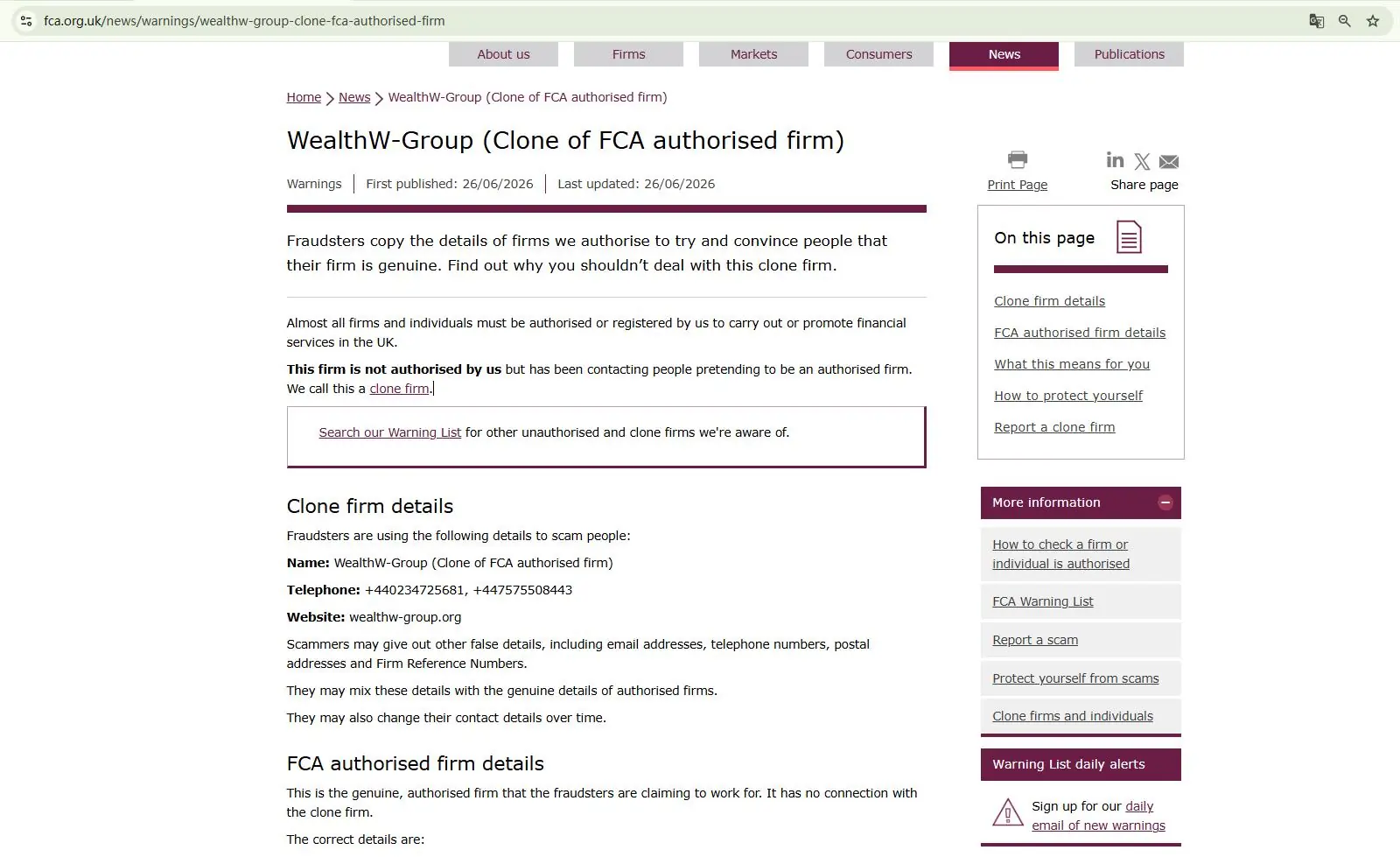
Fraudsters copy the details of firms we authorise to try and convince people that their firm is genuine. Find out why you shouldn’t deal with this clone firm.
Clone firm details
Fraudsters are using the following details to scam people:
Name: WealthW-Group (Clone of FCA authorised firm)
Telephone: +440234725681, +447575508443
Website: wealthw-group.org, wealthw-group.cc
Scammers may give out other false details, including email addresses, telephone numbers, postal addresses and Firm Reference Numbers.
They may mix these details with the genuine details of authorised firms.
They may also change their contact details over time.
FCA authorised firm details
This is the genuine, authorised firm that the fraudsters are claiming to work for. It has no connection with the clone firm.
The correct details are:
Firm Name: WEALTHWISE FINANCIAL SERVICES LIMITED
Firm Reference Number: 401507
Address: Wealthwise Financial Services Ltd, 9A Great Minster Street Winchester Hampshire, SO23 9HA, UNITED KINGDOM
Telephone: +4401962867711
Email: julian@wealthwiseifa.com
What this means for you
If you deal with this firm, you won’t have access to the Financial Ombudsman Service if you want to complain.
You also won’t be protected by the Financial Services Compensation Scheme (FSCS) if things go wrong. This means it’s unlikely you’d get your money back if the firm goes out of business.
If you sent money to a fraudster on or after 7 October 2024, you may be covered by protections introduced by the Payment Systems Regulator (PSR). Find out what to do if you’ve been tricked into making a payment to a scam account.
Common Warning Signs to Watch For
Whether you are evaluating Harindale or any other online platform, be alert to these widely used scam tactics:
1. Unrealistic Profit Promises: Platforms that guarantee high or fixed returns with little to no risk are a major red flag. Legitimate investments always carry risk, and no broker can legally guarantee profits.
2. Withdrawal Barriers: A frequent complaint among scam broker victims involves being unable to access their own funds. Requests for additional “fees” or “taxes” before releasing a withdrawal are common manipulation tactics. In such cases, exploring asset and fund recovery options may help assess possible solutions.
3. Pressure-Based Sales Tactics: Fraudulent brokers often push investors into quick decisions through limited-time offers, aggressive account managers, or manufactured urgency. Take your time and never invest under pressure.
4. Unverifiable Credentials: If a broker’s license number cannot be confirmed on a regulator’s official website, treat it as unregulated—regardless of what it claims on its own platform. For cases involving crypto transactions, a cryptocurrency tracing service may help track fund movements.

5. Fake Reviews and Endorsements: Scam platforms frequently publish fabricated testimonials or use celebrity images without consent to build false credibility.
What to Do If You Have Been Affected?
If you have sent funds to Harindale or a similar unregulated platform, act quickly — but stay calm. Here are the steps most likely to help:
Stop all further payments immediately. Do not send additional money under any circumstances, even if you are promised that it will unlock a refund or release your balance. This is almost always a further manipulation tactic.
Gather your evidence. Screenshot everything: account statements, deposit confirmations, chat logs, emails, and any communications from the broker. Store copies somewhere the broker cannot access.
Contact your bank or card provider. If you paid by credit or debit card, call your bank and ask about initiating a chargeback. The sooner you act, the better your chances. Bank transfers are harder to reverse, but still worth reporting.
File an official report. Report the incident to:
- Your country’s financial regulator (FCA, ASIC, etc.)
- Your local police or cybercrime unit
- Action Fraud (UK), IC3 (US), or your national equivalent
Seek independent advice. Contact your bank, a regulated financial adviser, or a consumer protection charity. Be cautious of “fund recovery” services that charge upfront fees — some of these are secondary scams targeting people who have already lost money.
How to Protect Yourself Going Forward?
- Always verify a broker’s license directly on the official regulator’s website.
- Check independent broker reviews—don’t rely only on testimonials shown by the broker.
- Never share sensitive information like banking details, passwords, or ID documents with unverified platforms.
- Be cautious of “too good to be true” offers—they often are.
Final Verdict
WealthW Group exhibits several warning signs commonly associated with unregulated and potentially fraudulent brokers. Until there is clear proof of proper licensing and transparent operations, investors are strongly advised to steer clear of this platform.
Scams thrive when victims stay silent. If you believe you’ve encountered a suspicious broker, a misleading investment scheme, or are facing withdrawal issues, consider reporting it to Ultra Dynamic Corp. Sharing your experience can help protect others and may initiate the right action toward resolution.
We also recommend reading the full Suisse Equity Review for a broader perspective.
For more updates, follow us on:





Leave a Reply